The Complete Spring Turf Renovation Checklist for Australian & NZ Golf Courses
Winter has done what winter does: compacted your profile, let thatch build under a slow-growing canopy, and left greens, tees and fairways a little tired heading into the season. As growth returns across Australia and New Zealand through September, October and November, the spring renovation window is the single best opportunity turf managers get each year to reset the playing surface before summer play and heat stress arrive.
This checklist assumes a standard spring renovation program; adjust timing and intensity to your own turf type, climate and tournament calendar.
Whether you’re managing bentgrass and Poa greens through their spring growth flush, or bringing couch and kikuyu fairways out of winter dormancy, the sequence is the same: relieve compaction, remove organic matter, reintroduce a firm, true sand rootzone, and give the plant every chance to recover fast. Get the order and the equipment right, and you’ll be playing on a firmer, healthier surface well before Christmas. Get it wrong, and you’re patching problems all summer.
This checklist walks through a proven spring renovation program stage by stage, with the turf renovation equipment GKB has built for each job.
1. Scarify and dethatch first
Before you aerate or topdress anything, you need to know what’s actually sitting in your top layer. Winter growth is slow, which means thatch, black layer, moss and weed grasses like annual meadow grass (Poa annua) have had months to build up undisturbed. Renovating on top of that layer just buries the problem.
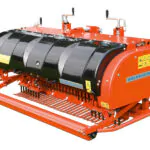
A scarifier lifts and removes this organic debris and lateral growth before it’s compacted back into the profile. GKB’s Vstrong is built for exactly this: a rotor shaft fitted with carbide scarifying blades in 2mm, 3mm or 4mm thicknesses, with a working depth up to 5cm and working widths from 1.2m to 2.4m. On greens, the VS120 and VS160 can be fitted with a hydraulically tipping 200-265 litre collection container, so you lift the debris straight off the surface in one pass instead of blowing or sweeping it separately.
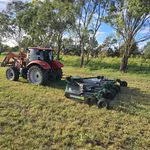
For fairways, sports fields or areas with a heavier surface layer to remove (black layer, thick mat, or an uneven surface that needs levelling as well as scarifying), the Combinator fraise mower is the step up. Its GKB Combirotor® takes interchangeable blades so the same machine mills, scarifies or (with the optional brushrotor) strips infill from synthetic surfaces, removing the surface layer cleanly without tearing out the grass roots underneath.
See the GKB Vstrong and GKB Combinator at Fieldquip Ag & Turf.
2. Aerate to relieve compaction and open the profile
Once the surface debris is gone, it’s time to deal with what’s happening below it. A wet winter followed by a season of cart and foot traffic leaves most AU/NZ courses with a compacted top layer that’s starving roots of oxygen and water. Grass simply can’t grow the root system it needs in compacted, anaerobic soil.
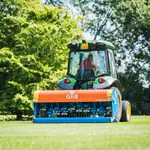
For regular maintenance aeration and rolling in the same pass, GKB’s Topair combines aeration with a hydraulically adjustable pressure roller. It’s useful for keeping greens and tees level and playable while still opening the top layer, with working depth to 16cm and working widths from 1.2m to 2.4m. The Evolvente® blade design minimises the prying effect that can leave a surface uneven after aerating, and the roller can be water-filled for extra weight on harder ground.
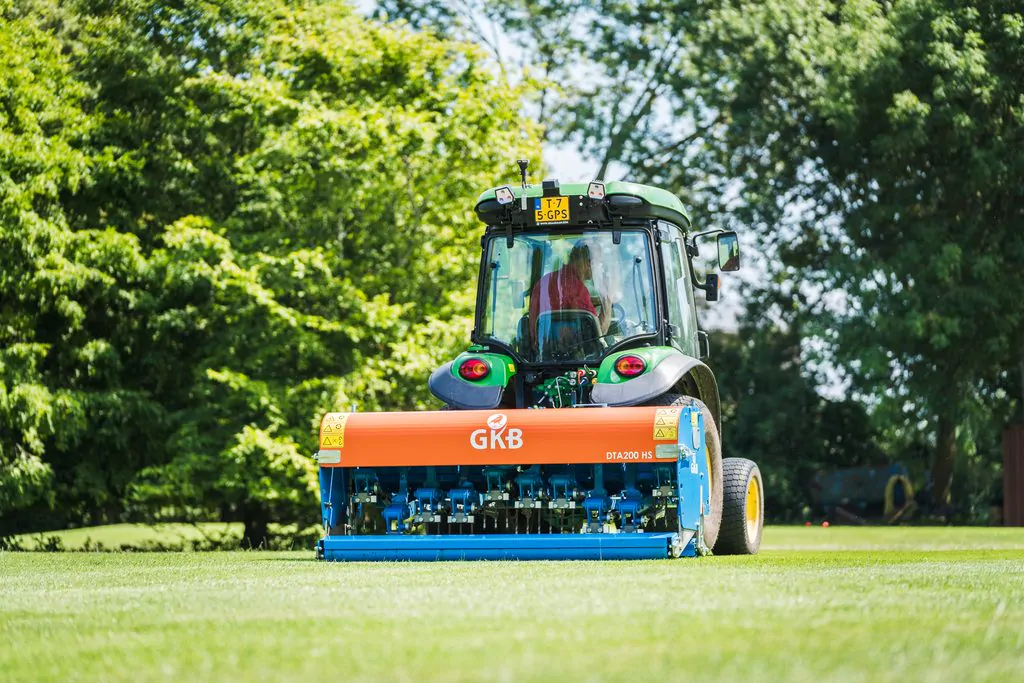
When the problem goes deeper than surface compaction (think heavily trafficked fairways, tees, or greens with a long-term compaction layer 20-40cm down), the Deep Tine Aerator (DTA) is the tool. With a heavy-duty three-speed gearbox, pry angle adjustment up to 25 degrees, and a quick-change tine mounting system, the DTA range (120cm to 260cm working width) genuinely fractures compacted profiles rather than just punching holes, giving roots real access to air and water again.
See the GKB Topair and GKB Deep Tine Aerator at Fieldquip Ag & Turf.
3. Topdress and rebuild the rootzone
With the profile opened up, this is your window to actually change the rootzone rather than just maintain it. Topdressing after aeration fills the holes left by coring or deep tining with clean sand, dilutes any remaining organic matter, and firms up the surface for faster, truer recovery.
GKB’s Topdrop applies sand, topdressing material or synthetic infill with precise control over conveyor speed, dosing valve opening and brush position, meaning you can lay down exactly the depth of material you need, consistently, across greens, tees or a full synthetic pitch. It’s available in four working widths and sand bunker capacities from 1.0m³ to 3.3m³, so a green-sized job and a full fairway program can both be handled by the same product range.
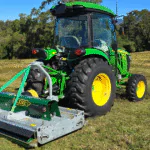
For bigger jobs, such as building a new sports pitch to the right sand profile or filling drainage trenches as part of a renovation, the Sandmover applies a much deeper, more consistent layer (2-10cm) across a 1.8m or 2.5m working width, straight from a 5-6m³ sand bunker, riding on broad balloon tyres to protect the surface you’ve just renovated.
See the GKB Topdrop and GKB Sandmover at Fieldquip Ag & Turf.
A simple spring renovation sequence
- Step 1: Scarify. Vstrong (greens, tees) or Combinator (fairways, heavier surface layers) to remove thatch, organic matter and lateral growth.
- Step 2: Aerate. Topair for regular aeration and rolling, or Deep Tine Aerator for deeper, long-term compaction.
- Step 3: Topdress. Topdrop for controlled, even sand or infill application to fill holes and firm the surface.
- Step 4: Rebuild (as needed). Sandmover for larger-scale sand application, rootzone rebuilds or drainage trench filling.
Frequently asked questions
When should golf courses renovate greens in Australia and New Zealand?
Most clubs time major renovation to their turf type’s peak growth window so the surface recovers before heavy summer play. Warm-season turf (couch, kikuyu) typically renovates as it comes out of winter dormancy through spring, while cool-season turf (bentgrass, Poa) is often renovated in spring and again in early autumn when growth is most active. Local climate, tournament calendars and member play should always guide the exact timing.
What’s the difference between a scarifier and an aerator?
A scarifier (like the GKB Vstrong or Combinator) cuts into and removes thatch, organic matter and surface growth using rotating blades. It works on what’s sitting on top of and just below the surface. An aerator (like the GKB Topair or Deep Tine Aerator) punches or fractures the soil profile to relieve compaction and let air and water reach the root zone. A full renovation program uses both, usually scarifying before aerating.
How deep should aeration go for compacted golf greens?
It depends on how deep the compaction actually is. Regular maintenance aeration (like the GKB Topair) typically works the top 16cm, which is enough for routine oxygen exchange and rolling. Long-term or deep-seated compaction on high-traffic tees, fairways or greens usually needs deep tine aeration reaching 25-40cm to genuinely fracture the compacted layer rather than just treating the surface.
Get spring renovation-ready with Fieldquip Ag & Turf
Fieldquip Ag & Turf supplies the full GKB turf renovation range to golf course superintendents and sports turf professionals across Australia and New Zealand, including the Vstrong, Combinator, Topair, Deep Tine Aerator, Topdrop and Sandmover. Browse the full GKB turf maintenance range or get in touch with our team to talk through the right renovation setup for your course this spring.